 Rocket City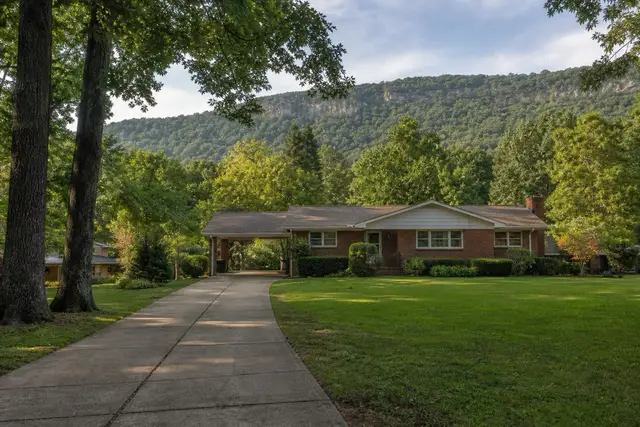
Rocket City Driveways connects Jones Valley homeowners with a local concrete contractor for driveway installation, replacement, and repair across the Jones Valley area.
Jones Valley fills the trough between Monte Sano and Green Mountain in south Huntsville, on land that was a working farm of roughly 2,500 acres before the neighborhoods arrived. Today it holds mid-century homes on large, mature lots alongside newer construction at The Ledges and Lendon, with the Valley Bend shopping center anchoring the daily errands. Two generations of housing means two distinct generations of driveways.
The mid-century streets carry drives approaching or past their design life — original pours under big trees, showing the lifted panels, surface wear, and widening cracks that decades of Alabama weather produce. The newer sections generate the opposite work: extensions, upgraded finishes, and pads added behind homes whose builders stopped at the minimum. Valley bottomland also collects runoff from the slopes on either side, which makes slab drainage a live question on many lots.
For both ends of that spectrum, Rocket City Driveways connects Jones Valley homeowners with a local concrete contractor. Replacement work on the older lots gets planned around mature trees and existing grades; new flatwork gets the base compaction and control joints the valley's clay demands. Either way, water is directed off and away before anything else is decided — a valley floor between two mountains collects plenty of it in a wet year.
The Valley Floor Gets Everyone's Water
Rain that lands on the surrounding heights finishes its trip on the valley floor, and driveways down here live with that arithmetic. Slabs need positive fall, edges that shed rather than dam, and downspout routing that keeps roof water away from the concrete's base, the small-scale versions of principles in the EPA's stormwater guidance. Climate records from NWS Huntsville confirm the volume involved: this is a wet county, and the low ground is where the wet collects.
For the mid-century streets, that water has had decades to work. Original pours under big trees show lifted panels, worn surfaces, and joints that stopped sealing years ago, and each wet winter compounds the ledger. Newer sections generate the opposite request: additions and upgrades to homes whose builders stopped at the minimum slab.
One Bid Process, Two Generations of Driveways
On an older Jones Valley lot the estimate starts by separating what water did from what roots did, because the fixes differ. Settled-but-sound panels may lift back to level; root-heaved or shattered sections come out, with the replacement planned around the trees that make these lots worth owning. Grade corrections get folded in so the new work stops repeating the old drainage mistakes.
On newer lots the visit scopes extensions and pads with the county's standard discipline: compacted stone over clay of the kind profiled by the Alabama Cooperative Extension System, four-inch slabs for cars, joints on a stated layout, and roughly two percent of fall. For either generation of driveway, the paperwork looks the same: a written spec that says what goes under the concrete, not just on top of it.
Good to know
How should a Jones Valley driveway handle runoff from the slopes?
The slab itself should shed toward the street or a swale, never toward the garage, and the lot's grading should intercept slope runoff before it reaches the concrete. Downspouts need discharge paths that bypass the driveway's base. When those three things are true, valley-floor concrete ages normally.
Can a settled panel on an older driveway be lifted instead of replaced?
If the panel is intact, lifting can bring it back to level for far less than replacement, and it is a common fix on mid-century drives. Panels that have cracked through or rest on still-moving ground are better cut out and re-poured. An on-site look sorts one case from the other.
Is sealing still worth doing on a decades-old driveway?
Yes, if the slab remains structurally sound: sealing joints and cracks blocks the water that drives further freeze-thaw damage and can add years of service. If the slab is already failing structurally, sealant is a bandage. Spend on sealing only after an honest verdict on the slab.
How much life is left in a mid-century concrete driveway?
Usable life depends less on age than on crack depth, settlement, and how well water has been kept out of the base. Drives that stayed dry underneath can keep serving; those with full-depth cracking and ongoing movement are finished regardless of the calendar. An assessment places yours on that spectrum.
Does summer heat cause problems for fresh concrete here?
Alabama heat speeds evaporation, and concrete that dries faster than it hydrates ends up weaker at the surface. Contractors counter with early-morning pours, mix adjustments, and prompt curing measures. Scheduling flexibility in July and August is part of getting a good slab.