 Rocket City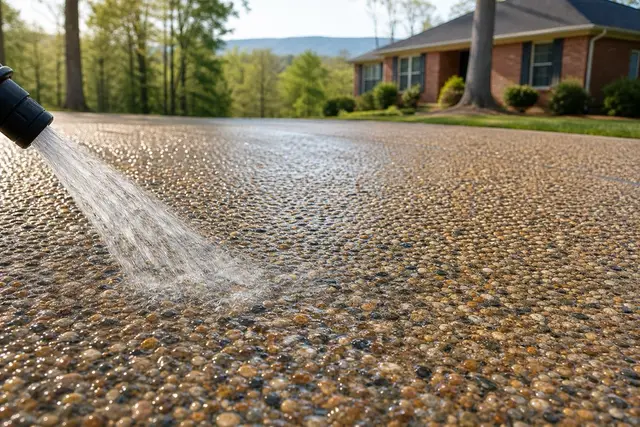
Rocket City Driveways connects Huntsville homeowners with a local concrete contractor for exposed aggregate driveways in Huntsville and the surrounding Madison County communities.
An exposed aggregate driveway gets its character from the stone itself. The slab is poured with a chosen decorative rock in the mix, the surface is treated so the outer skin of cement stays soft while everything beneath hardens, and the next morning that skin is washed away — leaving tightly packed pebble locked in place. Every drive comes out slightly different, which is precisely the appeal.
For Huntsville's climate, the finish earns its keep in traction. The city takes 54 inches of rain a year, and winter mornings can glaze smooth concrete with frost — an aggregate surface gives tires and shoes texture to bite when a troweled slab would be slick. It also disguises everyday grime and the reddish dust that Tennessee Valley clay tracks onto pale concrete, so the drive looks clean longer between washes.
Longevity comes down to the same discipline as any North Alabama slab: air-entrained concrete under the decorative surface, and a clear sealer renewed on schedule so freeze-thaw cycles can't work moisture in around the stones and pop them loose. The local contractor Rocket City Driveways pairs you with can show aggregate samples up front, so the driveway you approve is the one that gets poured.
Picking the stone before the pour
The character of an exposed aggregate drive is decided at the ready-mix plant. Suppliers connected through the National Ready Mixed Concrete Association network carry regional stone options, from rounded river gravels in browns and tans to sharper crushed granites in gray and salt-and-pepper blends, generally in the three-eighths to five-eighths inch sizes that read well underfoot.
There are two ways to get that stone to the surface. Integral exposure uses decorative rock throughout the whole mix, while seeding broadcasts premium stone over the fresh surface and works it in, which stretches an expensive aggregate across only the layer you actually see. Either way, the finisher's rule of thumb is to reveal about a third of each stone's diameter: enough to show the rock, not so much that the paste loses its grip.
Winters, deicers, and keeping stones put
The first winter is the one that sets the tone. New decorative concrete should see no chemical deicers at all in its first cold season, a caution consistent with Portland Cement Association guidance on young exterior surfaces; plain sand handles the occasional icy morning without chemistry. In later winters, use deicers sparingly and steer clear of ammonium-based products, which attack concrete directly.
Long term, the sealer is what keeps stones seated. It blocks water from working into the bond line between rock and paste, which is where freeze cycles would otherwise pop individual stones loose. When washing off the Valley's red dust, keep the pressure washer on a wide fan tip and a respectful distance, because a needle jet at close range can excavate stones faster than any winter. The supporting technical reference for this Huntsville scope is American Concrete Institute.
Further reading
Good to know
Is exposed aggregate more expensive than a broom-finished driveway?
Somewhat, because decorative stone and the extra finishing steps add cost over a plain slab. The itemized quote shows the difference so you can decide whether the finish earns it for your home.
Do the stones in exposed aggregate eventually come loose?
On a well-built, regularly sealed drive, very few ever do. Isolated popouts can happen over the years and are patchable, but widespread stone loss usually traces back to skipped sealing or aggressive pressure washing.
How do I clean red clay dust off an exposed aggregate driveway?
A garden-hose rinse handles most of it, and a soft brush with mild detergent takes care of settled grime in the texture. A maintained sealer keeps the clay from staining into the paste in the first place.
Can I use ice melt on an exposed aggregate driveway?
Skip it entirely the first winter while the surface is young, and use it sparingly afterward, avoiding ammonium-based products. Sand gives traction with zero chemical risk and sweeps away in spring.
Does exposed aggregate need more sealing than plain concrete?
The schedule is similar, every few years, but the stakes are higher because the sealer protects the bond holding each stone. Letting it lapse for many winters is how popouts start.